Roguelike Games on Mobile: Learning to Love Losing
Roguelikes reset you after every defeat, but each run teaches something. How runs, builds and permanent unlocks fit together, and how to improve steadily.

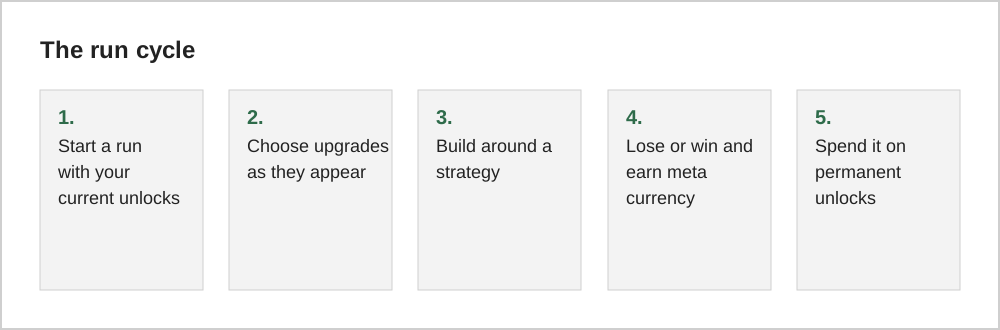
Roguelikes, and their close cousins roguelites, are built around runs. You start from scratch, make choices as you go, and eventually lose. Then you start again. On mobile, where sessions are often short, the format works very well: a run might last ten to thirty minutes and every run is a little different.
What makes a game a roguelike
The term is used loosely, but most mobile roguelikes share a few features:
- Runs: each attempt starts fresh.
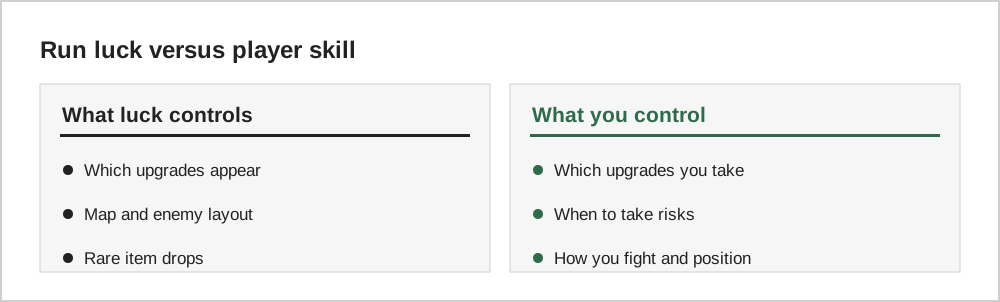
- Randomness: levels, rewards or enemies change from run to run.
- Permanent death: losing ends the run.
- Meaningful choices: picking between upgrades, cards or paths shapes the run.
Many mobile games are roguelites, which add permanent upgrades between runs so that you get slightly stronger over time even when you lose.
Builds: choosing a direction
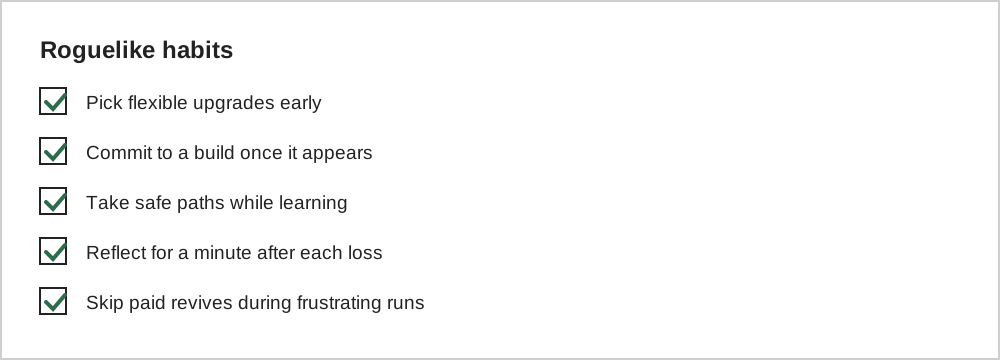
The most important skill in a roguelike is recognising a "build", a set of upgrades that work well together. Picking whichever upgrade looks strongest in isolation usually produces a weak mix. Picking upgrades that support one plan, such as fast attacks, critical hits or a particular element, often produces a run that snowballs.
Risk and reward
Roguelikes regularly offer choices between a safe option and a risky one: an easy room with small rewards or an elite enemy with a better prize. Early in your learning, the safe path helps you see more of the game. As you improve, taking calculated risks is how you build stronger runs.
Learning from each defeat
Because you will lose often, the habit that separates improving players from frustrated ones is reflecting briefly after each run:
- What killed you, and could you have seen it coming?
- Which upgrade felt strongest? Which one did nothing?
- Did you commit to a build, or collect random pieces?
Asking these questions takes a minute and turns every loss into information.
Permanent unlocks and spending
Roguelites often sell permanent upgrades or extra characters. Some games also sell "revives" that continue a run after death. A revive bought with real money in the middle of a frustrating run is rarely good value, because the run's weaknesses usually remain. Permanent unlocks that open new strategies can be worth considering if you love the game, but most can be earned through play.
A habit checklist
A sample first-hour plan
In your first hour, do not try to win. Instead, aim to learn three things: how the first enemies behave, which kinds of upgrades feel strongest and where the first difficult encounter usually appears. Try one run focusing on defence, one on damage and one balanced, and note how far each gets.
After those runs, you will have a feel for the game's rhythm. Many roguelikes also unlock new options after a few attempts, so early runs are partly an investment in a wider set of choices later.
Short sessions and long runs
Mobile roguelikes often have runs lasting ten to thirty minutes. If you are frequently interrupted, check whether the game saves mid-run. Some do, some do not, and losing a promising run to a phone call is frustrating. Games with short, self-contained runs are often a better fit for commutes and breaks.
Common questions
Should I unlock permanent upgrades before attempting harder runs?
Permanent upgrades make runs easier, but skill and build recognition matter more. A balanced approach is to spend meta currency regularly while focusing on learning, so both your account and your knowledge improve together.
Is it worth looking up builds online?
Community build guides can speed up learning, especially for understanding which upgrades combine well. Discovering builds yourself is part of the fun for many players, so it depends on what you enjoy.
The short version
Roguelikes are designed for you to lose and try again. Treat each run as practice, learn to recognise builds, and judge your progress by how far you get on average rather than by any single run. Improvement is steady, and the moment a run finally comes together is one of the best feelings in mobile gaming.