Word and Logic Puzzle Games: Getting Better With Short Daily Sessions
Crosswords, word searches, nonograms and sudoku-style games reward technique. Simple strategies that make puzzles faster and more satisfying.
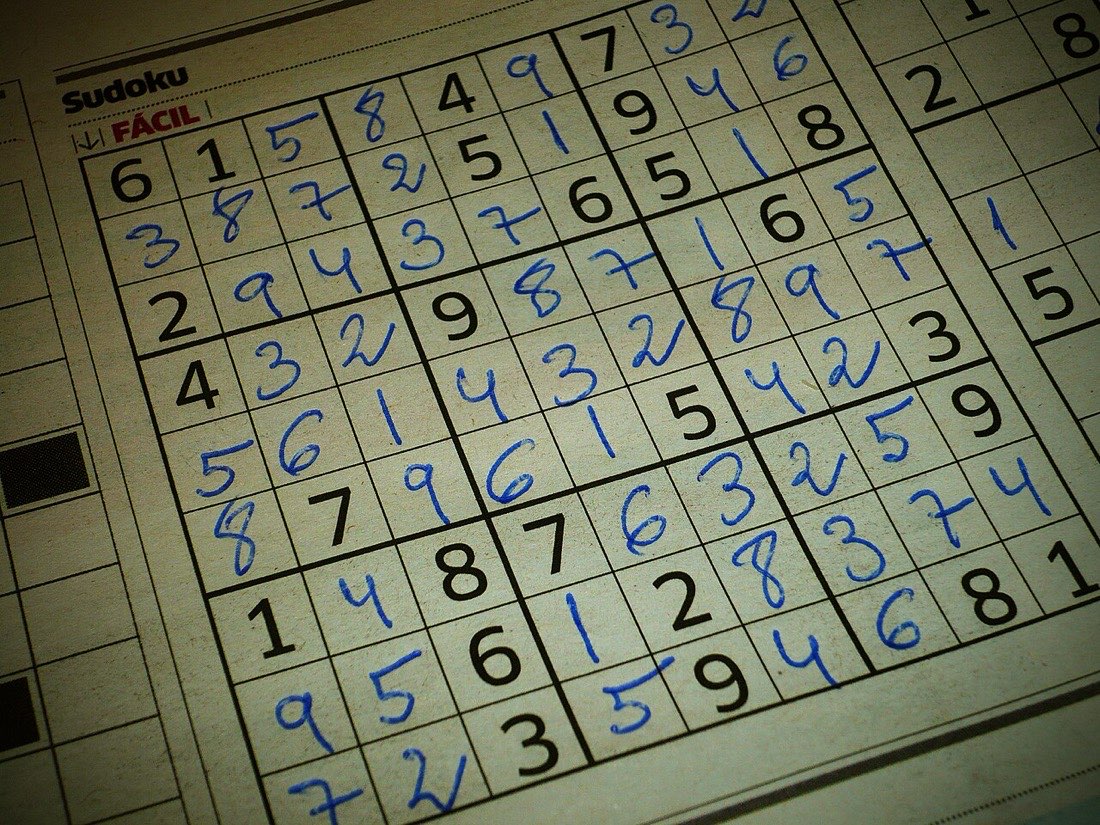
Word and logic puzzle games are some of the most relaxing games on mobile. They usually have no timers, no opponents and very little pressure, and many people play them as a daily habit. Even so, a few techniques make puzzles more enjoyable and help you move on to harder ones.
Word games: work from structure, not guesses
Word games range from crosswords and word searches to games where you form words from a set of letters. Across most of them, the most useful skill is recognising common letter patterns.
- Look for common endings such as -ING, -ED, -ER and -LY.
- Try likely letter pairs first, such as TH, CH, SH and QU.
- In letter-wheel games, find short words first; they often reveal letters of longer ones.
Logic puzzles: never guess
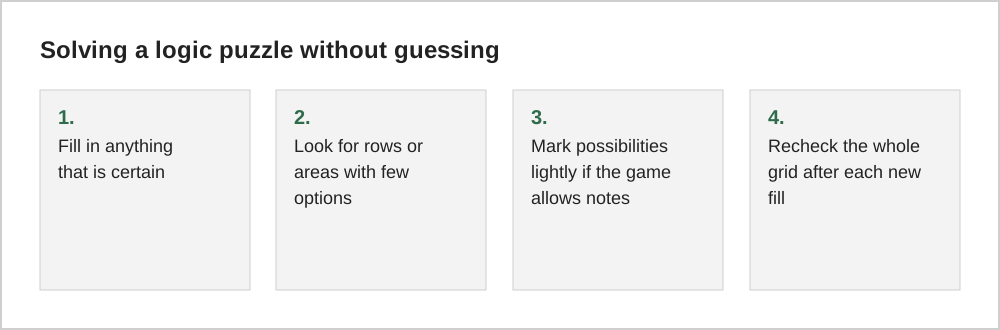
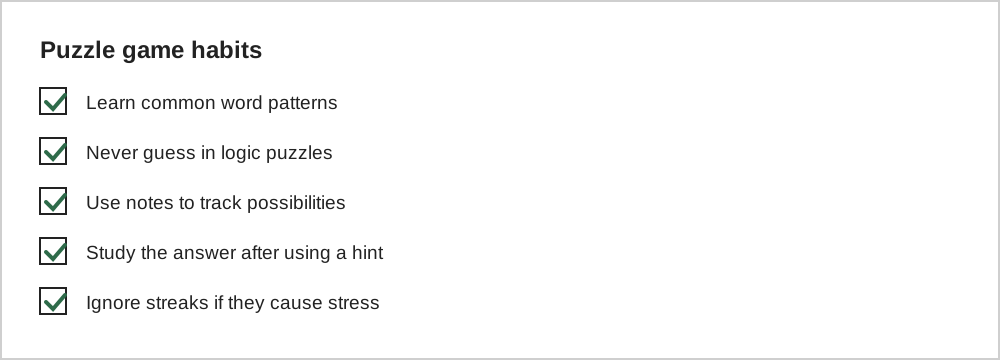
Logic puzzles such as sudoku-style grids and nonograms (picture logic puzzles) are designed to be solved by deduction. If you find yourself guessing, it usually means there is a deduction you have not spotted yet.
Using hints well
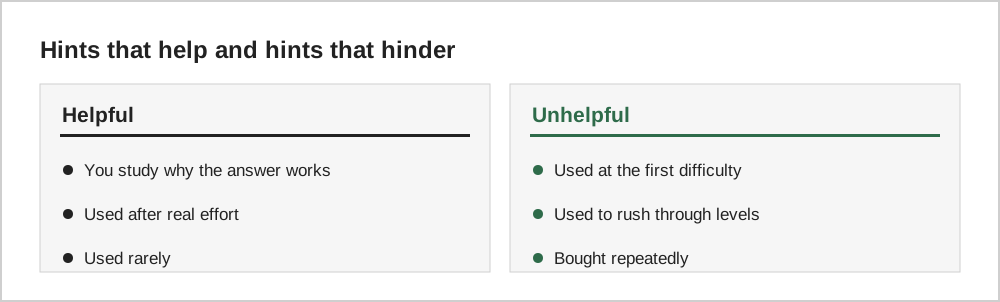
Most puzzle games offer hints, sometimes free and sometimes earned by watching ads or paid for with coins. Hints are most useful when they teach you something. Before using one, try to work out why you are stuck. After using it, ask why that answer was correct, so the same situation does not stop you next time.
Daily puzzles and streaks
Many puzzle games offer a daily puzzle with a streak counter. Streaks can be a pleasant habit, but they can also turn into pressure. If missing a day would ruin your enjoyment, consider ignoring the streak entirely and playing when you feel like it.
Accessibility in puzzle games
Puzzle games often include options such as larger text, colour-blind friendly palettes, and the ability to turn off timers. These settings make puzzles more comfortable for everyone. See our guide to accessibility settings.
Building a solving routine
Strong puzzle players often follow the same order every time. In word games they look for common prefixes and suffixes, then vowels, then rare letters. In logic puzzles they scan the whole grid for forced moves before working on any single area. A routine reduces the feeling of being stuck because there is always a next step to try.
Keeping a short note of techniques you have learned, such as a particular pattern in Sudoku or a word ending that often fits, turns each puzzle into practice. Over a few weeks the improvement is noticeable, and the games become more satisfying rather than more frustrating.
Free versus paid puzzle apps
Many puzzle games are free with ads, while others charge once or offer a subscription. If you play daily, a one-time purchase or a modest subscription can be worth it simply to remove interruptions. Before paying, check whether the game offers enough new puzzles to last, and whether hints are sold separately.
Common questions
Do puzzle games actually improve thinking skills?
Puzzle games can be good practice for the specific skills they use, such as pattern recognition or logical deduction. Broader claims about brain training are debated by researchers, so it is best to enjoy them as entertainment and mental exercise rather than as treatment.
How do I move from easy to hard puzzles?
Increase difficulty gradually, and when a harder puzzle stops you, look at the solution afterwards to learn the technique you were missing. Most logic puzzle types have a small set of techniques that unlock many harder puzzles.
Are daily puzzles harder than regular levels?
It depends on the game. Many daily puzzles follow a weekly rhythm, getting harder towards the weekend, while others stay at a fixed difficulty.
The short version
Word games reward pattern recognition and logic puzzles reward deduction. Use hints as lessons rather than shortcuts, take breaks when stuck, and keep streaks as a bonus rather than an obligation. Puzzle games are at their best as a calm, enjoyable part of your day.