Managing Resources and Currencies in Mobile Games
Soft currency, premium currency, materials and tickets: how to tell which resources are scarce, what to save, and what to spend freely.
Many mobile games juggle a surprising number of resources: coins, gems, energy, materials, tickets, tokens, shards. It can feel overwhelming, but most of them fall into a few categories, and each category has a sensible way to manage it.
Sort resources by scarcity
The most useful question about any resource is how hard it is to get more of it.
| Category | Examples | Usual approach |
|---|---|---|
| Plentiful | Basic coins, common materials | Spend freely |
| Steady but limited | Daily energy, stamina | Use before it caps |
| Scarce | Rare materials, upgrade shards | Save for important upgrades |
| Premium | Gems, crystals bought with money | Spend deliberately, convert to real money |
Do not let capped resources overflow
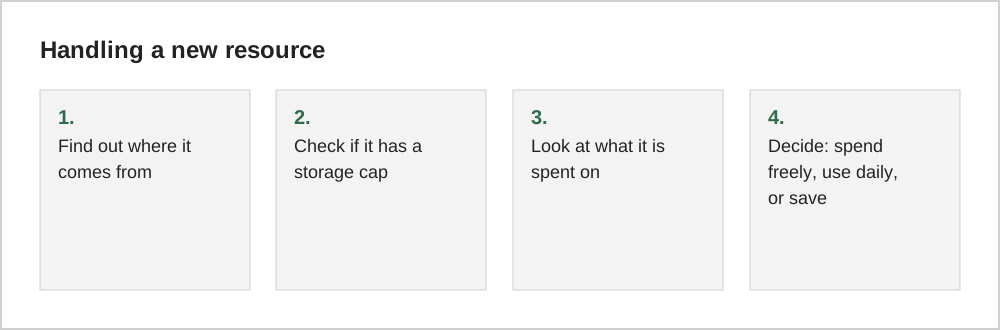
Some resources stop accumulating at a cap, such as energy that refills to a maximum. Once it is full, any extra is wasted. These resources are best used regularly. If you often find them full, you are effectively losing free progress.
Premium currency: think in real money
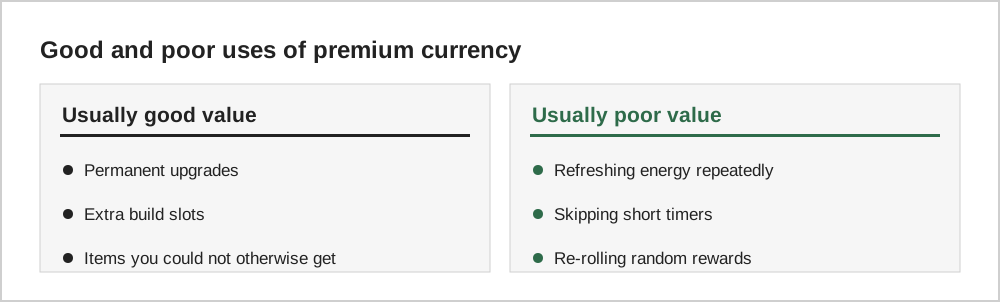
Premium currency is the resource most worth thinking about carefully. Games price items in gems or crystals partly because it separates the purchase from its real cost. Work out what one unit is worth in your currency and keep that figure in mind.
Beware of conversion chains
Some games convert one currency into another and then into a third. Each step can hide a cost or create leftovers you cannot use. When a game asks you to exchange currencies, check what you will end up with and whether there is a better use for the original resource.
Saving for the right moment
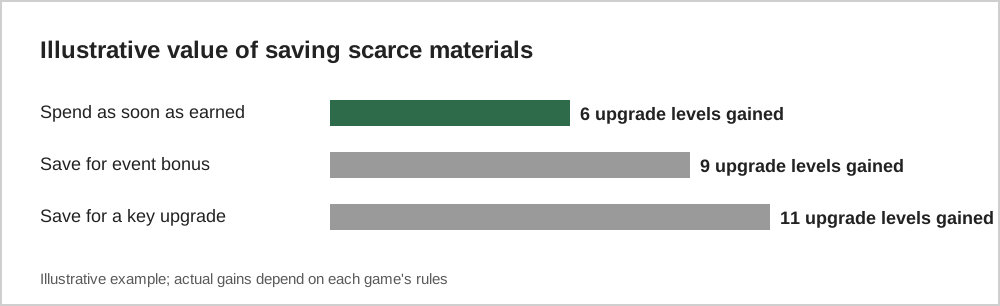
Scarce resources are most valuable when they unlock something important or are spent during events that multiply rewards. Having a reserve also means you can respond when a strong new item or character appears.
Keep a simple record
You do not need a spreadsheet, but noting a few things helps: what one unit of premium currency costs, which resources you are always short of, and what you are saving for. This makes every in-game decision quicker.
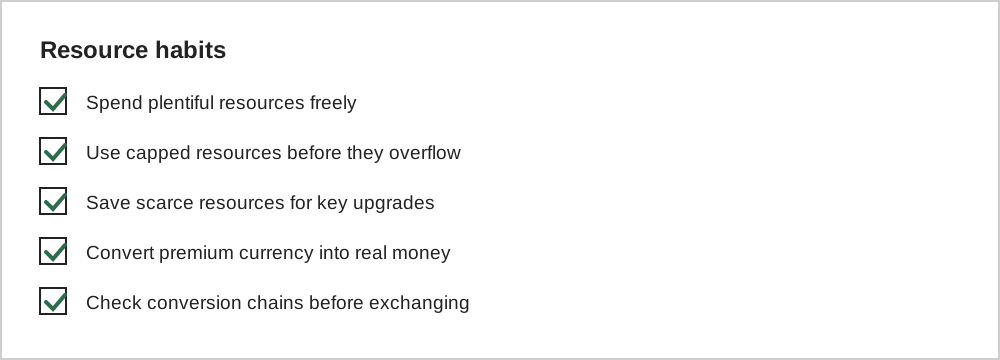
A weekly resource review
Once a week, open your inventory and note the totals of your three or four most important resources. Compare them with last week. If a resource keeps rising and you never use it, you may be saving too much or it may matter less than you thought. If one is always empty, that is your real bottleneck and the place to focus.
This short habit replaces guesswork with a simple record. It also helps you resist impulse purchases: when you can see that you already have enough of something for the next upgrade, a shop offer for more of it is easier to ignore.
Understanding sinks and faucets
Game designers talk about faucets, the ways resources enter your account, and sinks, the ways they leave. Daily rewards and battles are faucets; upgrades, crafting and repairs are sinks. When a game adds a new sink, such as a fresh upgrade tier, it often adds an offer for the resource that sink consumes.
Knowing this helps you anticipate pressure points. If an update introduces a new level cap, expect upgrade materials to become scarce for a while. Saving a little of those materials before big updates is one of the simplest ways to avoid feeling forced to buy them.
Common questions
Should I spend premium currency or save it?
Save it by default and spend it on permanent benefits, such as extra build slots or long-term upgrades, rather than temporary boosts. Many experienced players keep a reserve for limited events they care about.
What should I do with resources from a game I am quitting?
Nothing needs to be done, but it is a good moment to check for active subscriptions and to note down your user ID in case you return. Avoid buying anything just to use up leftover currency.
The short version
Sort resources by how hard they are to get. Spend plentiful ones, use capped ones regularly, save scarce ones for important moments, and always translate premium currency into real money before spending it.