Healthy Mobile Gaming Habits for Adults and Kids
How to keep mobile gaming enjoyable: managing notifications, breaks for eyes and hands, sleep, and recognising when a game has started to feel like a chore.

Mobile games are easy to pick up at any moment, which is both their charm and their risk. A few minutes here and there can quietly add up, and games are designed to make stopping harder than starting. Healthy habits are less about strict rules and more about keeping the choice in your hands.
Start with notifications
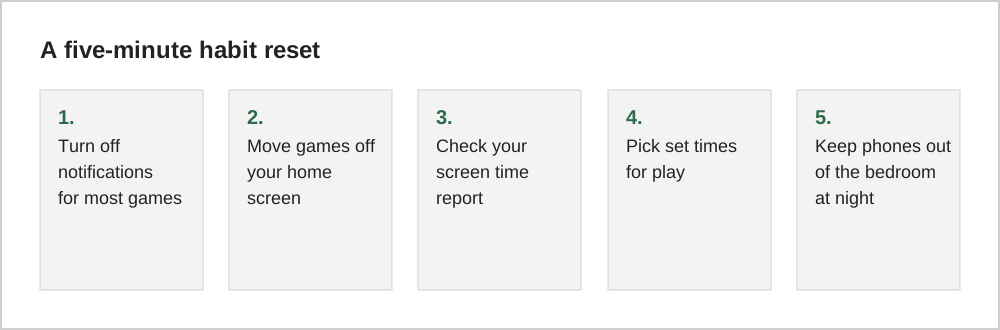
Notifications are the main way games pull you back. Energy refills, finished upgrades, new events and friend requests all compete for attention. Turning most of them off is the single easiest change.
Take breaks for your eyes and hands
Long sessions can strain eyes, hands and posture. Many eye care professionals recommend the "20-20-20" habit: every 20 minutes, look at something about 20 feet (around 6 metres) away for 20 seconds. Stretching your hands and wrists, and changing position, also help during longer sessions.
| Strain | Simple habit |
|---|---|
| Tired eyes | Regular 20-20-20 breaks, comfortable brightness |
| Sore thumbs or wrists | Short stretches, avoid gripping tightly |
| Neck and back | Hold the phone higher, change position |
Protect sleep
Playing late at night can delay sleep, both because games are stimulating and because "one more round" is hard to resist. Setting a cut-off time, using your phone's downtime or bedtime features, and charging the phone outside the bedroom are simple, effective habits for both adults and children.
Notice how a game makes you feel
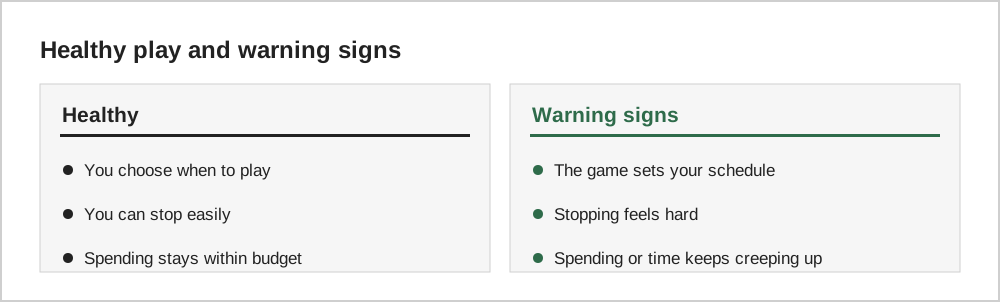
A healthy game leaves you feeling relaxed, entertained or satisfied. Warning signs that a game has become a chore include:
- Logging in mainly to protect a streak or avoid missing out.
- Feeling irritated or anxious when you cannot play.
- Spending more money or time than you intended, repeatedly.
- Playing to escape problems rather than for fun.
The World Health Organization includes "gaming disorder" in its International Classification of Diseases, describing a pattern of impaired control that significantly affects daily life. It affects a small proportion of players, but if you recognise those signs in yourself or someone close to you, talking to a doctor or a support service is a good step.
For families
For children, habits work best when they are agreed together: when gaming happens, for how long, and what comes first, such as homework or outdoor time. Playing with children occasionally helps you understand what they enjoy and makes conversations about limits easier. Our parental controls guide explains the tools that support these agreements.
A weekly check-in with yourself
Once a week, ask three questions. Did I play when I meant to, or when a notification or habit pulled me in? Did I spend what I planned, or more? Did playing leave me relaxed or irritated? The answers are more useful than any single rule, because they show how games actually fit into your week.
If the answers are mostly good, keep going. If one keeps coming up negative, change one thing: turn off notifications, set a time limit or take a few days off a particular game. Small adjustments usually work better than drastic rules.
Playing with others
Games are often more enjoyable with friends or family. Playing together can turn screen time into shared time, and it naturally limits sessions because everyone has to agree to stop. Co-operative games, puzzle games played side by side and friendly competitions are all good options.
Common questions
How much daily game time is too much?
There is no single number that suits everyone. A more useful test is whether gaming fits alongside sleep, work or school, exercise and time with people you care about. If one of those is being squeezed out regularly, it is worth cutting back.
Can games be good for you?
Many people find games relaxing, social or mentally stimulating, and puzzle and strategy games can be satisfying ways to unwind. The aim of healthy habits is not to avoid games but to keep them enjoyable.
The short version
Turn off notifications, take regular breaks for eyes and hands, protect sleep, and pay attention to how games make you feel. Gaming is a great hobby when you are in charge of it; small habits keep it that way.