Auto-Battlers: How to Draft, Position and Manage Your Economy
In auto-battlers, the fights play themselves; your job is drafting units, placing them well and managing gold. The core principles explained simply.
In an auto-battler, you build a team from a shared pool of units, arrange them on a board, and then watch them fight automatically. Your decisions happen between fights: which units to buy, which to combine, where to place them, and how to spend your gold. It is a genre about planning and adapting rather than reflexes.
The round structure
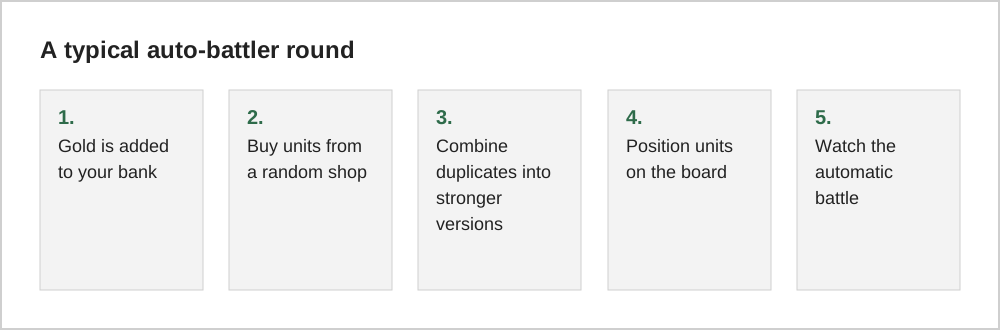
Most games run several rounds against other players or computer opponents. Losing rounds costs you health; the last player standing wins.
Synergies
Units usually belong to one or more groups, often called traits, classes or origins. Having several units from the same group activates a bonus. Building around one or two synergies is the backbone of a strong team.
Economy: the hidden skill
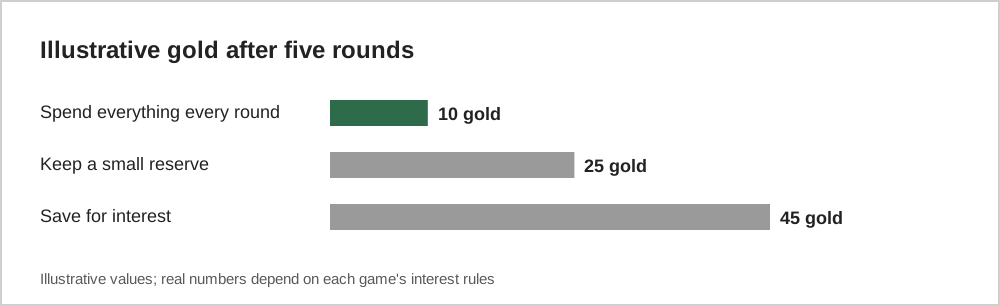
Many auto-battlers pay interest on saved gold, or reward win and loss streaks. This creates a real trade-off between spending now to win rounds and saving to grow your income.
| Approach | When it works |
|---|---|
| Save gold early, spend later | Your team is holding up and interest is growing |
| Spend aggressively | You are losing health quickly or a strong combination is close |
| Lose deliberately for a streak bonus | Advanced; only when the game rewards loss streaks and your health is high |
Positioning
Placement is often the difference between two similar teams. General principles apply across most auto-battlers:
- Durable units go in front to absorb damage.
- Damage dealers go behind them, often in corners where they are harder to reach.
- Spread out against enemies with area attacks; cluster when your own units benefit from being close together.
- Watch the opponent's board before the fight and adjust if you can.
Reading the shared pool
In many auto-battlers, all players buy from the same pool of units. If several opponents are building the same synergy, the units you need will be scarce. Glancing at other players' boards and switching to a less contested direction is a skill that pays off quickly.
Spending real money
Most competitive auto-battlers sell cosmetic items, such as board skins or characters that do not affect strength. This is generally a fair model because spending does not change who wins. If a game sells power that affects battle outcomes, it is worth thinking carefully before investing time.
A simple plan for early rounds
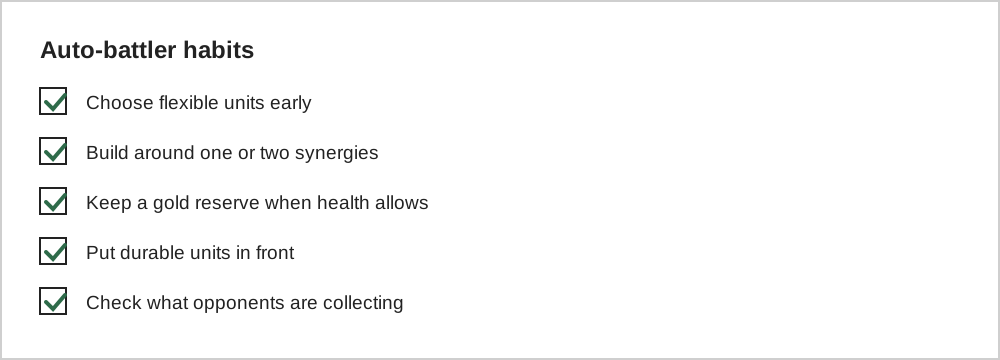
In the first few rounds, buy units that are strong on their own rather than chasing a specific synergy. Keep pairs that could combine into upgraded versions, and sell units you no longer need to keep your bench clear. Aim to save gold towards the interest thresholds most auto battlers reward, while losing as little health as possible.
By the middle rounds, look at what the shop has offered most often and commit to a direction that fits. Flexibility early and commitment later is a reliable pattern across many games in the genre.
Learning from replays
Many auto battlers let you watch recent fights or view opponents' boards. After a loss, check what beat you: was it positioning, a synergy you could not counter or simply a stronger economy? Writing down one lesson per session builds understanding faster than playing many matches without reflection.
Common questions
Do I need to memorise every unit?
No. Start by learning a few strong synergies and the units in them. Over time you will recognise more combinations naturally. Many players keep a simple reference list open while learning.
Is it better to play many games quickly or a few slowly?
Reviewing a few games carefully, especially losses, usually teaches more than rushing through many. Ask what your final board was missing and whether your economy decisions were sound.
Can I play auto-battlers casually?
Yes. Most auto-battlers include unranked or casual modes where you can experiment with synergies without pressure on your rating.
The short version
Auto-battlers are decided between fights. Draft flexibly, commit to synergies when the shop supports them, manage gold rather than spending it all, and position thoughtfully. Watching what opponents collect helps you avoid fighting over the same units.